What to Ask a Security Subcontractor Before Award on a Data Centre
What to ask a security subcontractor before award on an Ontario data centre: WSIB clearance, insurance, scope, submittals and closeout.
Key points
- Before award, ask the security sub for a written scope letter, WSIB clearance, insurance certificates, safety records, a submittal schedule and its equipment list.
- WSIB requires the principal to have a clearance before construction work begins and for the whole time the sub works, and a clearance lasts up to 90 days.
- Ontario requires approved working at heights training, valid for three years, for construction workers who use fall protection, which matters for pole and rooftop cameras.
- Most security change orders start in a scope letter's exclusions, so compare each bidder's exclusions against the Division 28 sections line by line.
- Settle the camera and access control brands, licences and admin passwords before award, because they decide who can service the system after turnover.
You’re carrying a data centre security package and need to pick one price. Before award, ask a security subcontractor for six things: a written scope letter tied to the Division 28 sections, a current WSIB clearance, insurance certificates that match your subcontract, safety and training records for the crew, a submittal and lead-time schedule, and the equipment list with who holds the licences at turnover. With those six, you can tell whether the low number will survive to closeout.
Below is what to ask for, why each item matters on a data centre, and a table you can take into the buyout meeting.
What should a contractor ask a security subcontractor for before award?
Ask for papers that show the sub can deliver the scope it priced: a scope letter with inclusions and exclusions, a WSIB clearance, insurance certificates, safety and training records, a named project lead, a submittal schedule with lead times, the equipment and licence list, and a sample closeout package. Put the list in the bid invitation so every bidder answers the same questions and the prices compare fairly.
| Ask for | What it protects | When you need it |
|---|---|---|
| Scope letter with inclusions, exclusions and clarifications by spec section | Change orders at the edges of the scope | With the bid |
| WSIB clearance certificate | Your liability for the sub’s unpaid premiums | Before work starts, kept current |
| Insurance certificates | The insurance clause in your subcontract | Before signing |
| Health and safety policy and training records | Site access for crews on lifts, poles and roofs | Before mobilization |
| Named project lead and crew plan | Coordination and schedule | At the interview |
| Submittal schedule and equipment lead times | Rough-in and door hardware dates | Before award |
| Equipment list, licences and admin rights at turnover | Owner acceptance and service later | Before award |
| Sample closeout package | Holdback at the end of the job | Before award |
The Canadian Construction Documents Committee’s CCDC 11, the Contractor’s Qualification Statement, gives you a ready format for the company side. It asks for legal structure, financial, contract security and insurance references, health and safety information, and recent comparable projects.
Which prequalification documents does a security subcontractor need in Ontario?
At minimum, a security subcontractor should give you a WSIB clearance, insurance certificates, a written health and safety policy and proof of the training its crew needs on your site. On a data centre, that training usually includes working at heights, because exterior cameras go on poles, walls and roofs. Check each document’s expiry date against the length of the security scope.
The WSIB’s clearance policy for construction says a principal who directly retains a contractor “must obtain a clearance certificate”, and that the clearance must remain “in effect for the entire time the contractor is performing the work.” A clearance is valid for up to 90 calendar days. Principals must keep records of clearances for at least three years. A security sub is often on site from rough-in to final commissioning, so set a renewal reminder.
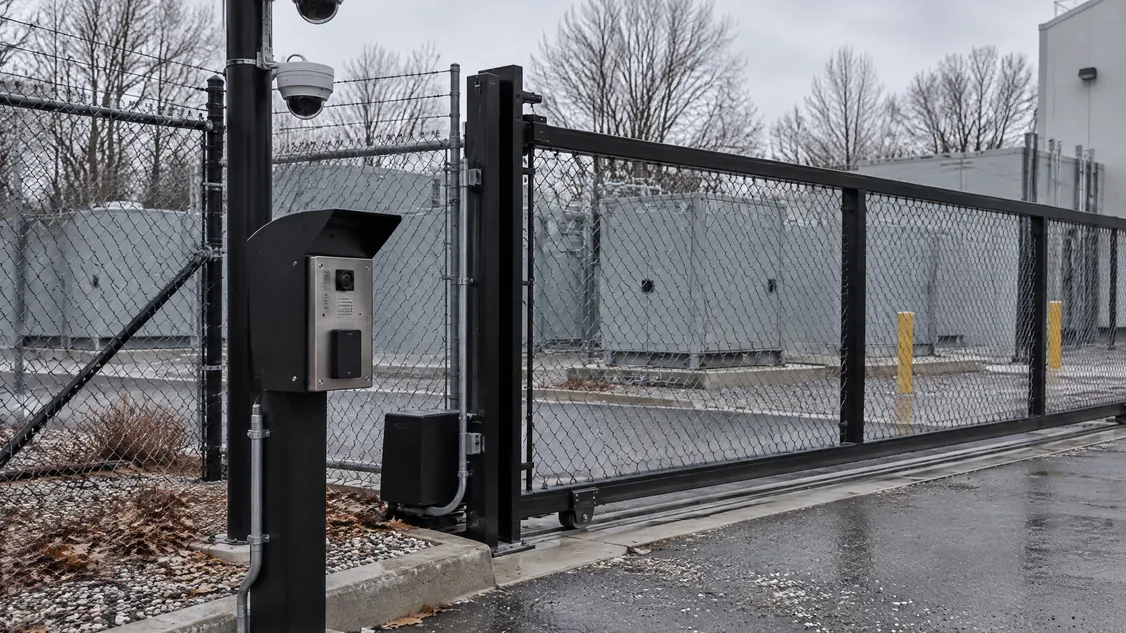
Ontario’s working at heights training page says construction workers who use fall protection must complete an approved program before using it, and the training “is valid for 3 years.” Employers must keep training records, and the page explains how to confirm a worker’s training with their consent. This matters for exterior work such as the pole-mounted dome cameras over the electrical switchgear yard and the rooftop mast camera that Securitron installed on a new Toronto data centre in 2026.
Ask for the safety policy as well. Ontario’s workplace posters page says a workplace with more than five regularly employed workers must “prepare, maintain and post” an occupational health and safety policy.
How do you check a security sub’s scope letter against Division 28?
Read every exclusion and clarification against the spec sections the bid covers. Security change orders usually start at the edges: electrified door hardware, conduit and power, poles and bases, network switches, the fire alarm interface and software licences. If one bidder excludes an item that the others carry, you are comparing two different scopes, and the low price will come back as a change order.
Our guide to Division 28 on a data centre lists who usually carries each of those items. One simple fix is to send every bidder the same responsibility matrix with the bid invitation and ask them to mark it up. Then you can line the prices up without guessing what’s in each one. Our bid comparison scorecard has a scoring layout if your buyout team wants one.
What should the security sub commit to on schedule and submittals?
Before award, the security sub should give you a submittal schedule that fits your rough-in and door hardware dates, lead times in writing for controllers, cameras and video storage, and the name of the person who answers RFIs and attends coordination meetings. On a data centre, late security submittals can hold up the electrical rough-in drawings and the door hardware order.
Ask three practical questions in the interview:
- Who runs the job day to day, and who is the site lead?
- How many technicians will be on site at peak, and when?
- Can the crew meet the owner’s site rules, such as background checks, badges or escort requirements, and how long does that take to arrange?
Equipment lead times vary by manufacturer and model, so take the sub’s dates in writing and carry them in your schedule. Don’t rely on a verbal estimate.
Which equipment and licence questions should be settled before award?
Get the proposed camera, video and access control brands in writing, along with who will hold the software licences and admin passwords at turnover. Owners and tenants sometimes restrict manufacturers, and a brand the owner later rejects means resubmittals and possibly new equipment. Settling ownership of licences and passwords now also keeps the owner free to choose who services the system.
Brand choice can come down to more than preference. In June 2025, the Government of Canada ordered the wind up of Hikvision Canada’s business and for the company “to cease all operations in Canada.” Ask bidders whether the owner has an approved manufacturer list, and confirm that warranty and local support exist for whatever is proposed.
Finally, ask to see a closeout package from a past job with client details removed. Our closeout guide lists what it should contain so it never holds up holdback.
How do I get Securitron’s price on my data centre job?
Add Securitron to your bid list and send us the drawings with the Division 08, 26, 27 and 28 sections. We’ll return a priced scope letter with clear inclusions and exclusions, and we’ll answer your prequalification questions before you award.
Securitron has installed and serviced cameras, access control, intrusion alarms, intercom and structured cabling across the GTA since 2008. Our data centre page shows the kind of work involved. If you’d rather talk it through first, book a short scope review with us before bid day.
Frequently Asked Questions
No. A clearance confirms the sub's WSIB account is in good standing and relieves you of liability for its unpaid premiums while the clearance is valid. It says nothing about scope, crew, schedule or closeout, so treat it as the minimum and keep checking the rest.
Yes. CCDC 11 is the standard Canadian Contractor's Qualification Statement, and it asks for company details, insurance and contract security references, health and safety information and recent projects. Many trades will also complete a GC's own prequalification form, so use whichever your company already reviews.
Put the list in the bid invitation so every bidder sends the same papers with its price. If you ask after bids close, you lose time chasing documents, and a missing clearance or insurance certificate can delay mobilization.
Read its exclusions and clarifications first. A low price often leaves out door hardware wiring, poles and bases, network switches, licences or the fire alarm interface. Ask the bidder to price those items or confirm in writing that they are included.
Securitron installs and services cameras, access control and alarms across the Greater Toronto Area and Hamilton, from our head office in Hamilton. That includes Toronto; Mississauga and Brampton in Peel; Vaughan, Markham and Richmond Hill in York Region; Oakville, Burlington and Milton in Halton; Pickering, Ajax, Whitby and Oshawa in Durham; and Hamilton, Guelph and Kitchener. For a job elsewhere in Ontario, call (905) 730-2425 to check.