Data Centre Security Commissioning: What Should You Witness?
Data centre security commissioning for GTA contractors: what the installer tests first, and which door, camera and alarm tests you should witness.
Key points
- The installer should test every door, camera and alarm point on its own sheets before you and the owner witness and sign those tests.
- At every door, witness a valid and an invalid card, forced and held alarms, request-to-exit, power loss and, for maglocks, the fire alarm release.
- Ontario maglock declarations ask whether each lock releases on fire alarm and power loss, and stays released until an authorized manual switch re-locks it.
- Check exterior camera views after dark, and measure recording retention on the recorder with every camera at its final settings.
- Most commissioning delays come from dead network ports, unapproved test sheets and unbooked witnesses, so put each one on the schedule.
You’re a few weeks from the integrated test on a data room or edge site, and the security sub says it’s ready to commission. Data centre security commissioning means the installer tests every door, camera and alarm point on its own sheets first, then you and the owner witness those tests and sign them. After that, the doors tied to the fire alarm go through integrated testing with the other life safety systems.
What you should witness fits on one page. At every reader, that’s a valid card, an invalid card, a forced door and a door held open, plus the maglock release on fire alarm and on power loss. For cameras and alarms, it’s the views by day and by night, recording that lasts as long as the spec says, and signals that reach whoever answers them.
A City of Winnipeg tender from 2024 put the stakes in one line. Its security commissioning section says the project “shall not be considered substantially complete until all points are tested, witnessed and approved.” On a data centre, where every door, camera and sensor is a point, that sentence can decide the date you ask for substantial performance.
What does commissioning the security systems on a data centre involve?
Commissioning the security systems on a data centre involves five steps in order: the installer configures each device, tests every point against its own sheets, and then demonstrates those tests to you and the owner. The fire alarm links go through integrated testing, and training and handover close it out. Each step needs the one before it finished, so an early slip moves every date after it.
Data centre owners usually talk about commissioning in levels. JLL’s guide to data centre commissioning lists seven, from Level 0 for programming and design up to Level 5 for integrated systems testing and Level 6 for the transition to operations. Here’s how the security scope typically maps onto that ladder.
| Level | What the security sub does | Who should be there |
|---|---|---|
| 1. Factory acceptance | Powers up panels and cameras, loads firmware and sets basic configuration, where the spec asks for it | Security sub, owner if specified |
| 2. Site acceptance | Checks deliveries against the approved submittals | Security sub, GC or EC |
| 3. Start-up and pre-functional | Powers devices on site, sets addresses and tests each point on its own sheets | Security sub |
| 4. Functional performance testing | Demonstrates every door, camera and alarm point against approved test sheets | GC or EC, owner, commissioning agent |
| 5. Integrated systems testing | Proves the maglock release and other fire alarm links with the other life safety systems | Testing coordinator, fire alarm contractor, security sub, GC |
| 6. Transition to operations | Trains staff and hands over administrator access and records | Owner’s operations and IT team |
The Royal Architectural Institute of Canada’s practice handbook gives the rule that saves the most witness days: “have the trades responsible prove or test systems prior to witnessing by the commissioning agent.” Put simply, your witness visit should repeat a test that has already passed once.
What should the contractor witness on access-controlled doors?
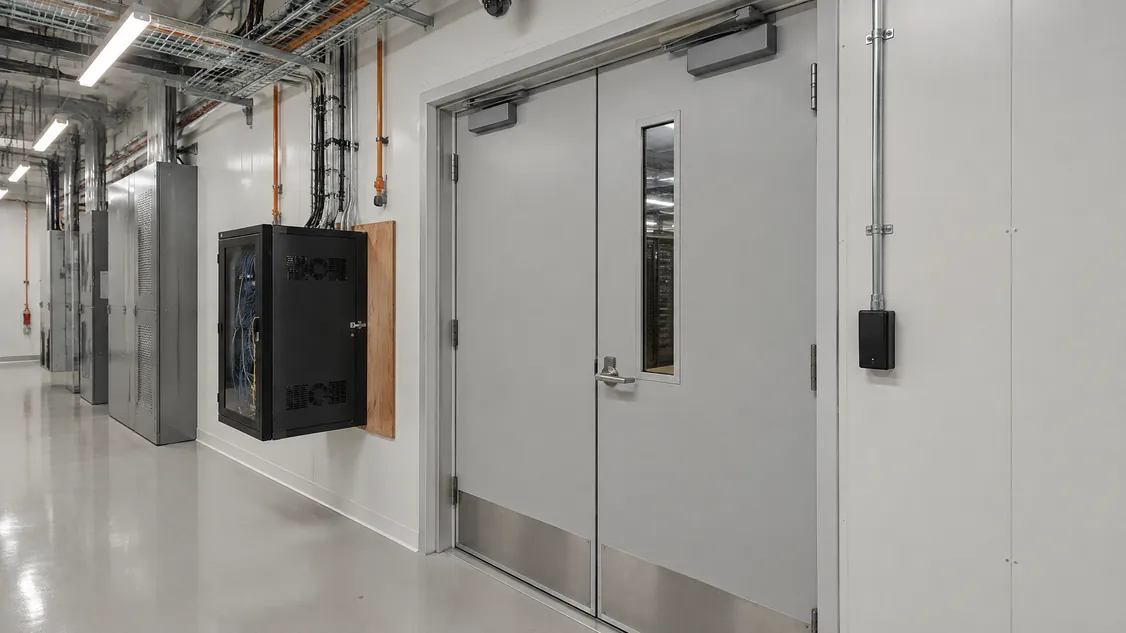
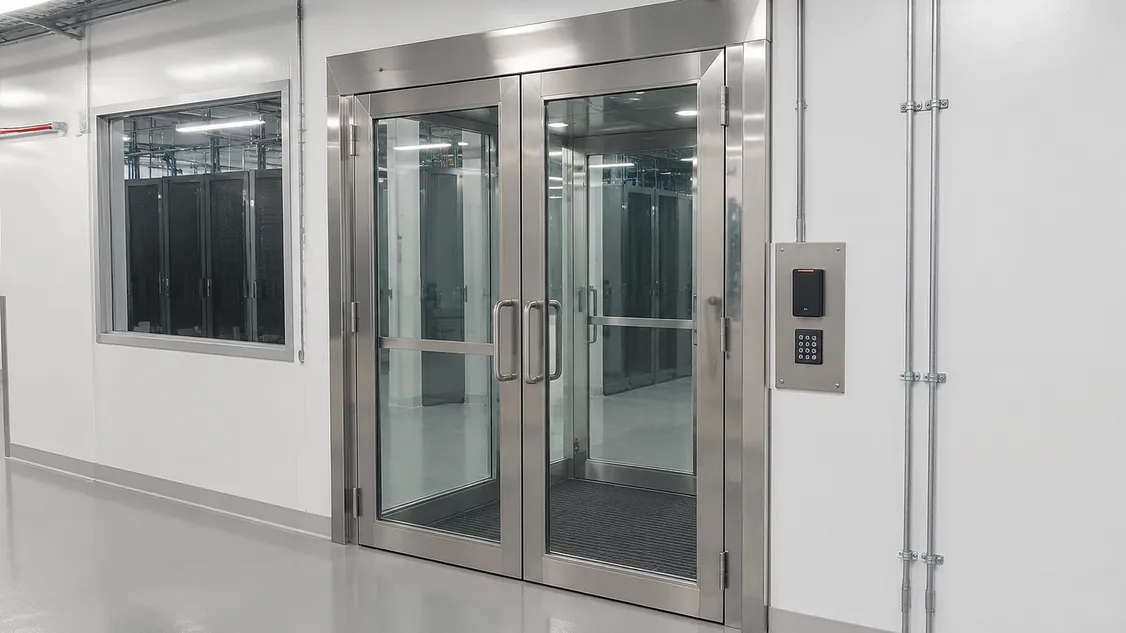
At each access-controlled door, witness a valid card and an invalid card, a forced door, a door held open too long, and a clean exit using the request-to-exit device. Watch what the door does when its power is cut. Doors with maglocks also need the fire alarm release witnessed, because those are the doors the integrated test and the building inspector will look at.
The Winnipeg tender is a useful model because it’s so plain. It calls for “one valid and one invalid badge” at each door, a simulated forced door and a held-open test. It even lets the installer shorten the held-open timer so testing goes faster, and then requires the times to go back to the normal setting, which is worth checking before you sign the sheet.
Maglocks on exit doors carry code duties in Ontario. London, Ontario’s declaration for electromagnetic locking devices, revised in February 2026, has to be signed by both the installer and the building owner. It asks whether each lock releases immediately on fire alarm, on loss of power to its controller, and on a fault in the wiring between the fire alarm panel and the controller.
It also asks whether the lock stays released when power comes back, and whether only a manual switch kept for authorized staff can re-lock it. Watch those two tests yourself, because a lock that re-arms by itself when power returns is easy to miss on a busy test day.
London also wants the fire alarm verification report and an Electrical Safety Authority inspection certificate attached before it accepts the installation. GTA municipalities may use different forms, so ask your building inspector early which ones apply and who signs them.
What should you witness on cameras and intrusion alarms?
For cameras, witness the aim and focus of each view with the owner present, and check the important exterior views after dark. Then confirm the recorder holds video for as many days as the spec requires. For intrusion alarms, walk each sensor into alarm and watch the signal arrive where it’s meant to be answered, whether that’s a security desk or a monitoring centre.
The US Department of Homeland Security’s video security handbook, updated in February 2025, says requirements should cover “day and night operations, lighting, weather conditions” and “should be detailed and testable.” It also explains that drive capacity sets how many days of recording remain before the system writes over the oldest video. So ask for the retention check in the test sheets, measured on the recorder with every camera running at its final settings.
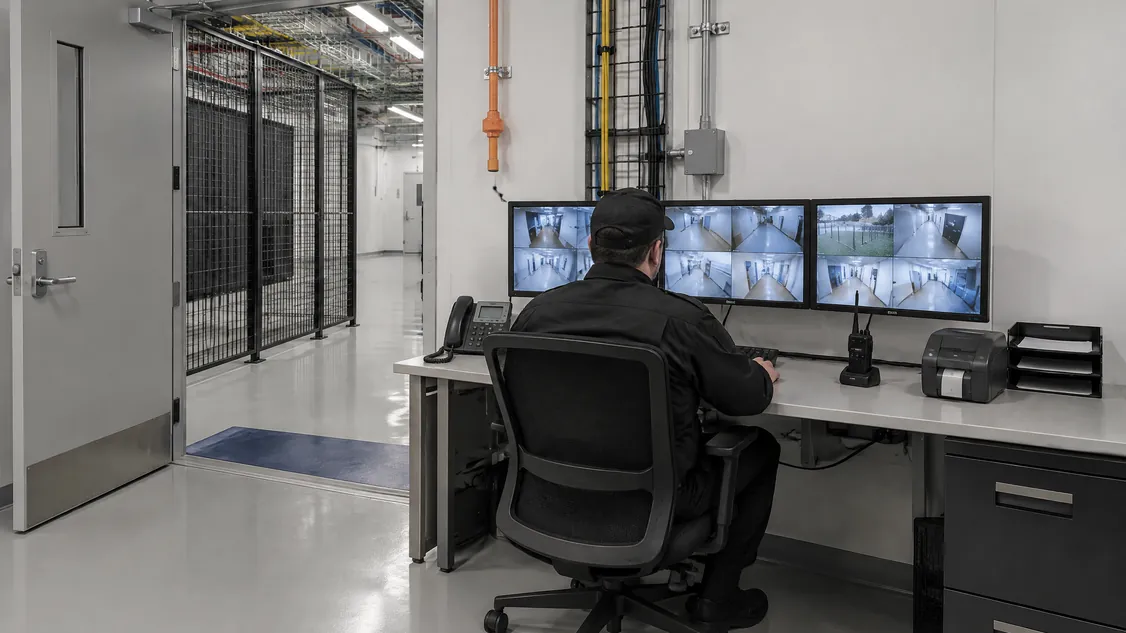
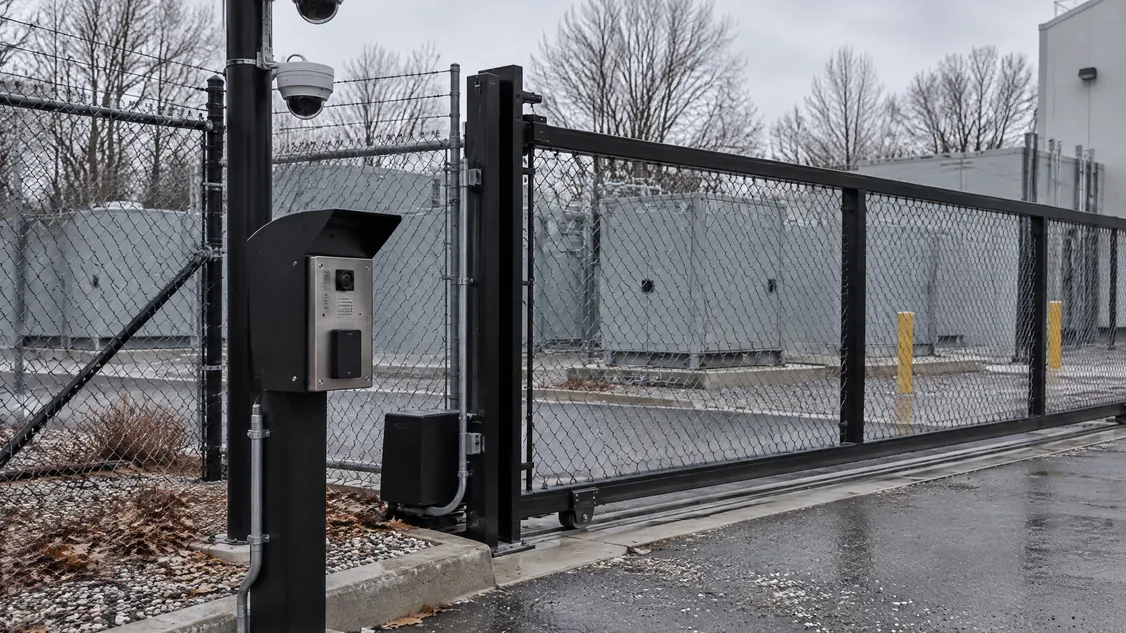
On the Toronto data centre where Securitron installed security this year, dome cameras sit on poles over the electrical switchgear yard and another camera is on a rooftop mast. Exterior views like those typically look different under yard lighting at night than they did at an afternoon test. Book at least one witness visit after dark.
For intrusion detection, the Winnipeg tender asks for a walk test of every zone, with “the actual area of detection incorporated into Record drawings.” It also has video tested wherever a camera sits near a monitored point, so an alarm brings up the right view.
When should security commissioning happen on a data centre schedule?
Security commissioning should finish before the integrated systems test, and it can only start once permanent power, live network ports and hung, adjusted doors are in place. Show those as dated dependencies on the schedule. If any one slips, security testing slips with it, and the integrated test usually moves too, because the maglock doors are part of it.
Our guide on when the security subcontractor should join a data centre project explains how those dependencies get set up from preconstruction. For commissioning itself, two more dates belong on the schedule.
The first is a slot for the owner’s operations and IT people, since the RAIC handbook notes that attendance at testing by the “future building operator is beneficial.” On a data centre, IT usually controls the network the cameras and controllers run on, so their sign-off matters. The second is a retest window, because some tests fail the first time and the second visit needs its own slot away from the integrated test day.
Where do commissioning delays and extra costs come from?
Most commissioning delays come from the things around the security system: network ports that aren’t live, door hardware that doesn’t match the approved openings, test sheets nobody approved in advance, and witnesses who weren’t booked. Each one adds a return visit, and return visits are where retest charges and disputed change orders usually start.
The Winnipeg tender handles two of these in writing. The installer submits its acceptance test spreadsheets “for review and approval before testing,” and each device “must be accurately and distinctly labeled prior to testing.” Run this list at the coordination meeting before the first witness visit:
- Have the security sub’s test sheets been submitted and approved?
- Does every device label match the drawings and the name in the software?
- Are network ports, IP addresses and power over Ethernet live in each area being tested?
- Is the fire alarm contractor booked for the maglock release tests?
- Who pays for a second visit when a test fails because another trade wasn’t ready?
Our acceptance testing plan covers fair pass and fail criteria in more depth.
How do I bring Securitron in to commission the security systems?
Name Securitron as the security sub at award, or add us to the bid list if the job is still out for pricing. If you’re an electrical contractor carrying Division 28, bring us in under your contract. Either way, send us the drawings and the security specification, and we’ll mark up the test sheets and witness dates you’ll need before testing starts.
Securitron has installed and serviced cameras, access control, intrusion alarms, intercom and structured cabling across the GTA since 2008. Our data centre page shows the kind of work involved.
Frequently Asked Questions
Yes, and it should. The City of Winnipeg commissioning specification, for example, has fire alarm interconnections on egress doors tested independently by simulating an alarm on the security input point. That way the integrated test day starts with doors that have already passed once.
Settle it in the subcontract before testing begins. A fair split is that the security sub covers retests for its own deficiencies, while a failure caused by a dead network port, a missing circuit or an unadjusted door goes back to the trade that owns it. Write down who books and pays for the second witness visit.
They should, at least for the camera, recording and network tests. The RAIC practice handbook notes that attendance at testing by the future building operator is beneficial, and on a data centre IT usually controls the network the cameras and controllers run on. Book them for the functional tests and the training session.
Signed test sheets for every door, camera and alarm point, record drawings updated with field changes and the actual intrusion detection areas, and any municipal declarations for maglocks. Those records feed the closeout package the owner needs before holdback moves.
Securitron installs and services cameras, access control and alarms across the Greater Toronto Area and Hamilton, from our head office in Hamilton. That includes Toronto; Mississauga and Brampton in Peel; Vaughan, Markham and Richmond Hill in York Region; Oakville, Burlington and Milton in Halton; Pickering, Ajax, Whitby and Oshawa in Durham; and Hamilton, Guelph and Kitchener. For a job elsewhere in Ontario, call (905) 730-2425 to check.