Hiring a Data Centre Security Installer: Get the One You Want
Hiring a data centre security installer in Ontario: name your pick through the GC's tender or hire direct, and what to check first.
Key points
- An owner can get a chosen security installer onto a data centre by naming them in the GC's tender or by hiring them directly.
- Under CCDC 2 (2020), an owner can object to a proposed subcontractor for reasonable cause before signing, and the price and time are adjusted.
- Asking bidders to name their security subcontractor on the bid form shows who will install before you award.
- Hiring the installer directly makes you the payer under Ontario's 28-day prompt payment and 10 per cent holdback rules, and responsible for the WSIB clearance.
- Direct contracts suit retrofits, expansions, tenant work and service after turnover.
If you’re developing a data centre and already know who you want on the cameras and access control, you can choose your data centre security installer. There are two routes. You can name the installer in the general contractor’s tender so every GC prices with them, or you can hire the installer directly under a separate contract. Timing matters more than the route: settle it before you sign the GC’s contract, because changes after that cost price and time.
Here is how each route works in Ontario, what each one asks of you, and what to check before you hire.
Can a data centre owner choose the security installer?
Yes. A data centre owner can name the security installer in the general contractor’s tender or hire them directly. CCDC 2, the standard Canadian prime contract, gives the owner a say in subcontractors before signing. It also reserves the owner’s right to award separate contracts. The hard part is swapping the installer late, because that usually means paying for the change.
CCDC describes CCDC 2 as “the industry standard prime contract between Owner and prime Contractor.” In the 2020 edition, GC 3.6.2 lets the owner ask the GC to say in writing which subcontract bids it would accept. GC 3.6.3 says the owner “may, for reasonable cause, at any time before the Owner has signed the Contract, object” to a proposed subcontractor and require another bidder. Under GC 3.6.4, the contract price and time are then adjusted by the difference. Supplementary conditions often amend these clauses, so check yours with your consultant.
How do I name a security installer through the general contractor?
Name the installer in the tender documents so every bidding GC carries the same security price. Then ask bidders to list their security subcontractor on the bid form, and confirm it before you sign. The GC stays responsible for schedule, coordination and site safety, and you decide who installs the cameras and access control.
The Canadian Construction Association’s bulletin on naming subcontractors (2015) says bid-calling authorities should require names for subcontractors that are critical to the project, and lists “controls systems” among its examples. It recommends naming five or fewer at bid time, so put security on that short list. It also notes that once the GC’s bid is accepted, a contract forms with the named subcontractor “without the need for any further communication.”
A practical sequence:
- Bring your installer in during design to review the security layout and price it, so the tender carries a real number. Our Division 28 guide shows where security meets doors, electrical and IT.
- In the tender, tell bidders which installer to carry, or give a short list of installers you accept.
- Add a line to the bid form for the security subcontractor’s name.
- Before signing, confirm in writing that the named installer is the one the GC will use.
If the security design won’t be finished at tender, a cash allowance is another option. Under CCDC 2 (2020) GC 4.1, allowance spending is “authorized by the Owner through the Consultant”, and the GC’s overhead and profit sit in the contract price, not in the allowance. GC 4.1.7 also asks the GC and consultant to schedule when allowance items must be ordered. That helps with controllers, cameras and electrified door hardware, which can have long lead times.
When should I hire the security installer directly?
A direct contract fits security work that sits apart from the main build. That includes a retrofit or expansion inside an operating site, tenant cages after turnover, and the service agreement that runs for years after the GC leaves. It can also work during construction, but then you take on coordination, payment and site safety duties the GC would otherwise carry.
Those duties are specific. CCDC 2 (2020) GC 3.2.2 says an owner who awards separate contracts shall “provide for the co-ordination” of that work with the GC’s and keep insurance in line with the main contract. Ontario’s constructor guideline says that if an owner contracts with more than one contractor and no contractor agrees to take the constructor role, “the owner will likely be deemed the constructor for the project.” You can avoid that by agreeing in writing that the GC stays constructor and the installer follows the GC’s site rules.
You also become the payer. The Council of Ontario Construction Associations’ prompt payment fact sheet for owners says “you must pay a contractor’s invoice within 28 calendar days of the date that you receive the invoice.” Its holdback fact sheet explains that section 22 of the Construction Act requires each payer to hold back 10 per cent.
| Question | Named through the GC | Direct contract with the owner |
|---|---|---|
| Best for | New builds and major fit-outs | Retrofits, expansions, tenant work, service |
| Who coordinates the installer | GC | Owner, unless agreed otherwise |
| Who pays and holds holdback | GC | Owner |
| Who gets the WSIB clearance | GC | Owner |
| When to lock it in | Tender and bid form, before signing | Before the installer mobilizes |
What should I look for when hiring a data centre security installer in Ontario?
Look for an installer who can show WSIB good standing, carries insurance that fits your contract, prices the scope from your drawings and services the system locally after turnover. On a data centre, also ask how they handle the edges of the scope (door hardware, fire alarm release, network ports) and what they hand over at the end.
Use this list in the interview:
- WSIB clearance. WSIB’s clearance policy says a principal who directly retains a contractor “must obtain a clearance certificate” before work begins. Without one, the principal may be liable for the contractor’s WSIB debts “up to the value of the labour portion of the contract(s).” Clearances last up to 90 days, so ask who renews them.
- Insurance. Get certificates early and compare them with the insurance terms in your GC contract.
- Scope review. A capable installer marks up your drawings and lists what they carry, what they exclude and what they need from other trades.
- System ownership. Ask whether other dealers can service the access control and video platforms, and confirm that licences and admin passwords transfer to you at turnover.
- Closeout. Ask for a sample as-built and commissioning record. Our closeout guide lists what the package needs.
- Service. Ask who answers a call after turnover, how fast, and from where.
What does it cost to choose your own security installer?
Choosing your installer before you sign the GC contract typically adds no cost of its own, because every bidder carries the same security number. Cost appears when the choice comes late. A swap after bids are in adjusts price and time, and coordination changes caused by a separate contract are priced as changes to the GC’s contract.
CCDC 2 (2020) GC 3.2.4 values changes “required as a result of the co-ordination and integration of the work of Other Contractors” under the GC’s change process. GC 3.2.6 does the same for cutting and remedial work caused by “ill-timed work”. The main cost drivers are when the installer joins, how complete the drawings are, and whether walls close before security rough-in is checked.
How do I bring Securitron onto my data centre project?
Either route works with Securitron. Through the GC, name Securitron as the security installer in your tender, or add us to the bid list and ask bidders to carry our price. To hire us directly, bring us in for retrofits, expansions, tenant work or service after turnover. On both routes, the first step is to send us the drawings.
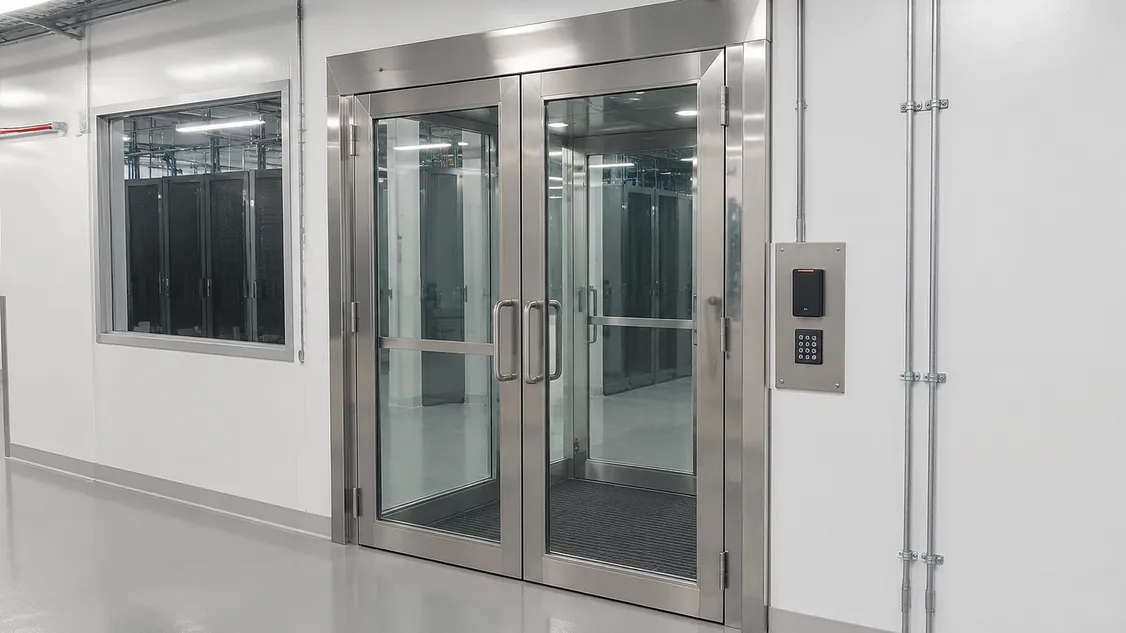
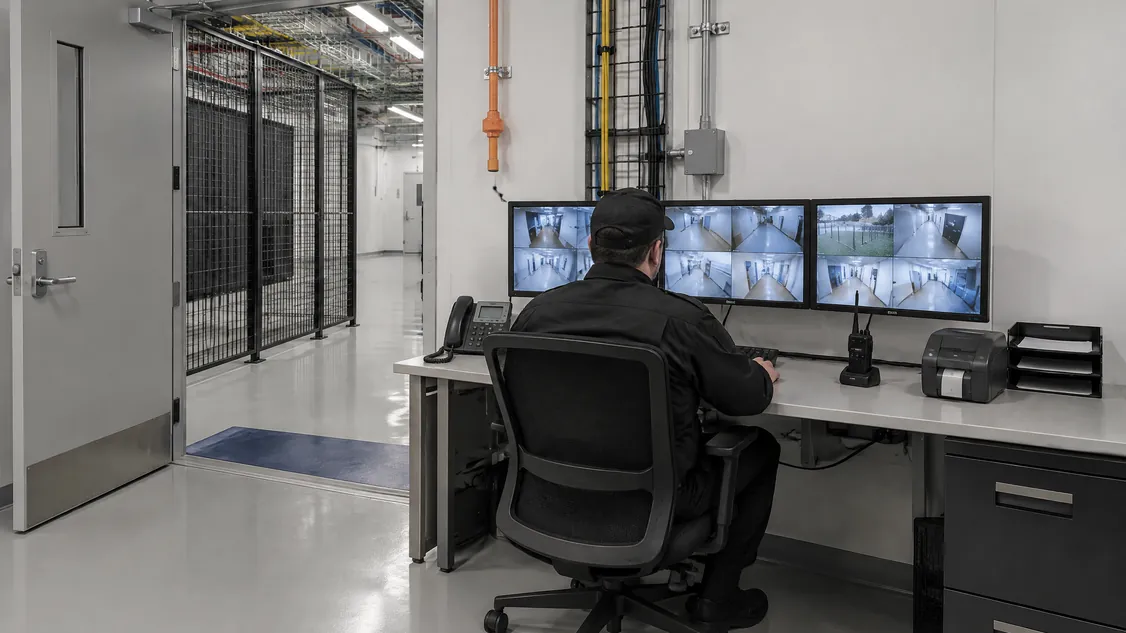
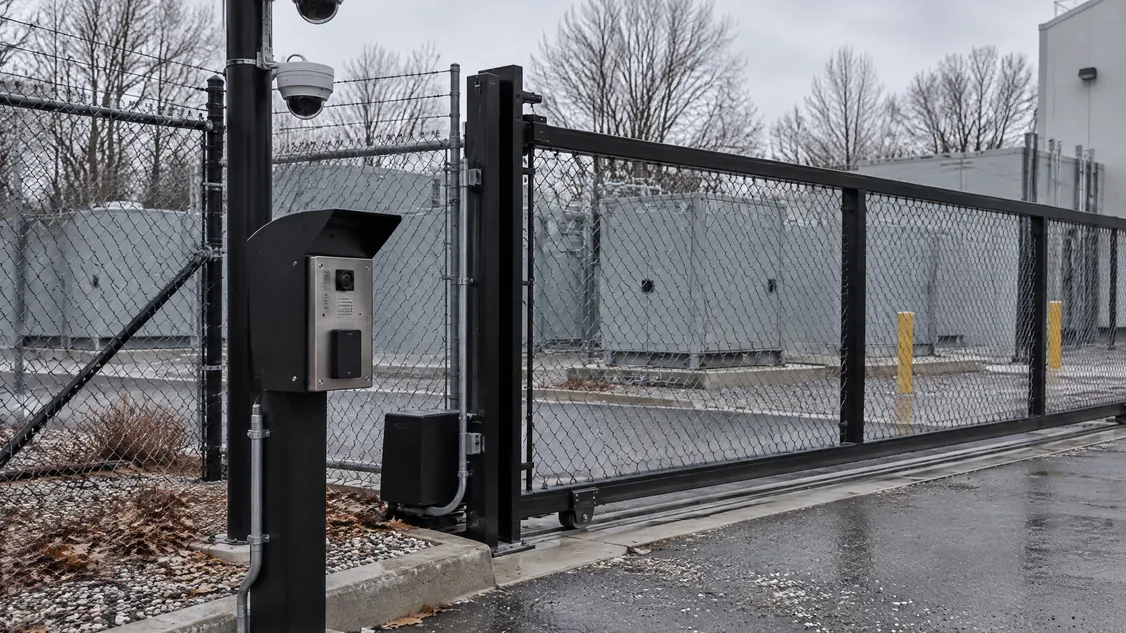
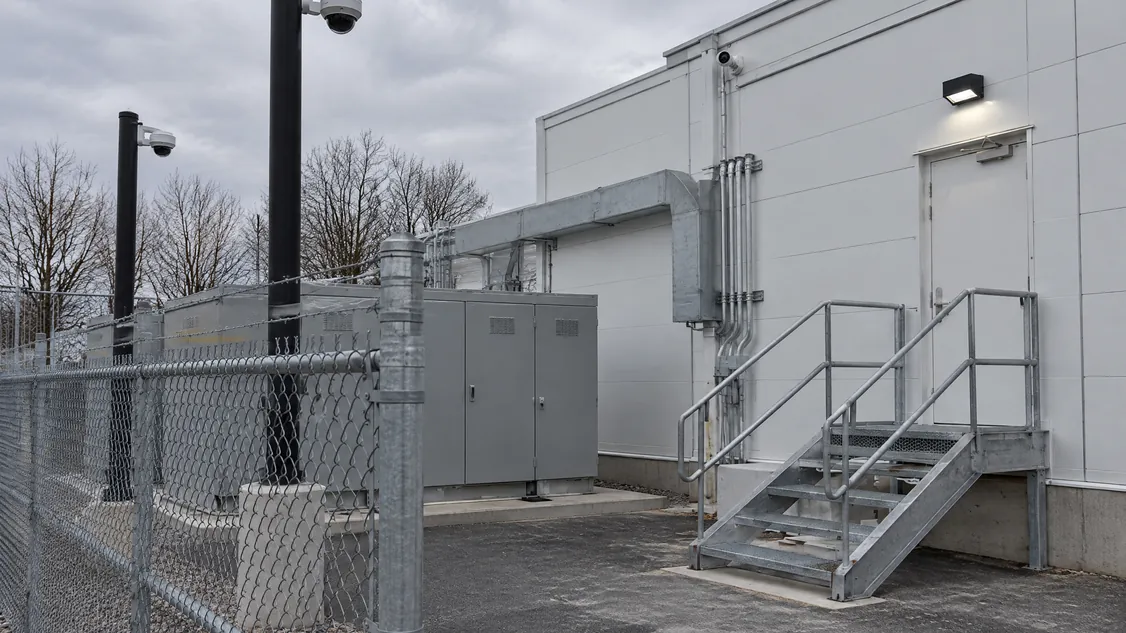
Securitron has installed and serviced cameras, access control, intrusion alarms, intercom and structured cabling across the GTA since 2008. In 2026 we installed the security on a newly built Toronto data centre: pole-mounted dome cameras over the electrical switchgear yard, a rooftop mast camera, interior cameras and cabling, and a wall-mounted network cabinet. Our data centre page shows the kind of work involved. Send us your drawings and tender schedule, and we’ll review and price the security scope so your GCs can carry it.
Frequently Asked Questions
It can, within limits. CCDC 2 (2020) GC 3.6.5 says the contractor is not required to employ a firm it may reasonably object to. Naming the installer in the tender lets each GC raise a concern before it bids instead of after award.
WSIB's policy puts the clearance duty on the principal who directly retains a contractor. On the GC route, the GC checks its security subcontractor and you check the GC. If you hire the installer directly, you get the clearance before work starts and keep it current.
Usually the owner or operator, because the GC's role ends at closeout. The installer who built the system already has the as-builts, programming and device list, so service starts without a learning curve. Make sure licences and admin passwords transfer to you at handover so you keep the choice.
Securitron installs and services cameras, access control and alarms across the Greater Toronto Area and Hamilton, from our head office in Hamilton. That includes Toronto; Mississauga and Brampton in Peel; Vaughan, Markham and Richmond Hill in York Region; Oakville, Burlington and Milton in Halton; Pickering, Ajax, Whitby and Oshawa in Durham; and Hamilton, Guelph and Kitchener. For a job elsewhere in Ontario, call (905) 730-2425 to check.