Assessing Site Readiness for License Plate Recognition
Assess whether a commercial vehicle lane can support reliable licence plate recognition using geometry, lighting, speed and acceptance tests.
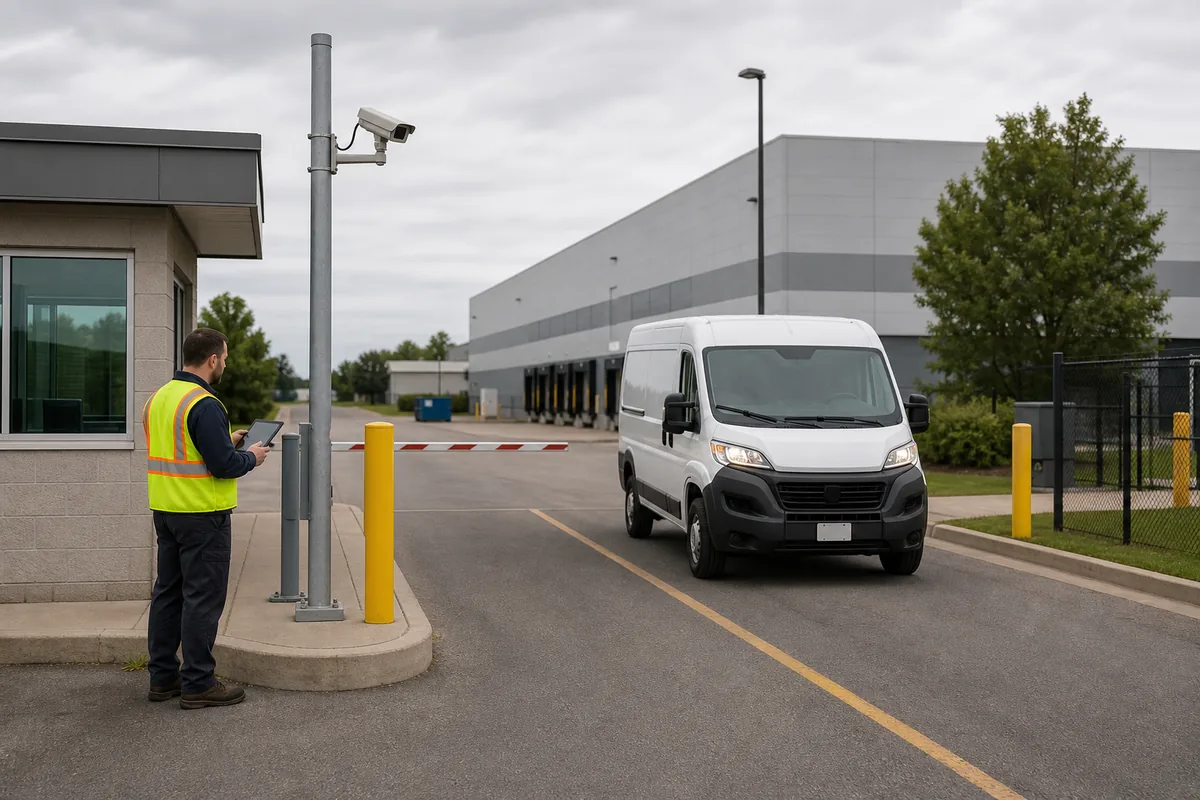
A property or logistics team can buy a capable license plate recognition system and still receive unreliable results if the lane cannot present a readable plate. The practical answer is to prove readiness lane by lane before accepting an accuracy promise. Define the decision each read will support, constrain the vehicle path, calculate the proposed camera geometry, test representative speeds and illumination, and retrieve the resulting plate event through the normal operating workflow.
Treat a plate read as a chain: vehicle presentation, image capture, recognition, metadata delivery and business action. Each link needs a named owner and a pass test. This approach exposes whether the site needs civil changes, added lighting, a dedicated capture camera, a second context view, an integration correction or a manual exception process before procurement is locked.
Start with the decision that a plate read must support
Site readiness begins with a precise use case. Access control, visit reconciliation, parking management and investigation create different requirements. Write one sentence for each lane that identifies the vehicle population, the expected action and the consequence of a wrong or missing read.
For example:
At the staffed inbound lane, read the front plate of a pre-registered carrier vehicle stopped at the call point, present the plate and visit match to the operator, and require manual approval when either value is missing or different.
That statement defines more than “use LPR at the gate.” It identifies the direction, vehicle state, plate position, system relationship and exception owner. It also prevents a recognized plate from silently becoming authorization for a visit that has expired or changed.
Document these fields before surveying equipment:
| Decision field | Readiness question | Evidence to retain |
|---|---|---|
| Purpose | What operational decision requires the plate? | Approved use-case statement |
| Vehicle population | Passenger cars, vans, tractors, trailers or a defined mix? | Representative vehicle list |
| Plate target | Front, rear or both, and on which vehicle component? | Lane and vehicle-path drawing |
| Vehicle state | Stopped, creeping or moving within a controlled speed range? | Operating rule and observed speed |
| Required output | Readable image, recognized characters, jurisdiction, confidence or event? | Output and integration specification |
| Action | Search, operator prompt, visit match, alert or gate request? | Workflow and permission rule |
| Exception | Who resolves missed, wrong, temporary, obscured or unmatched plates? | Exception procedure and audit record |
A readiness review for warehousing and logistics properties should also identify tractor and trailer changes, queue pressure, third-party carriers, snow storage, oversized vehicles and after-hours operation. Those conditions influence where a reliable capture point can exist.
Map every lane and select a controlled capture point
Choose the point where a vehicle is most predictable. A call station, stop line, barrier or narrow approach can reduce speed and lateral variation. A wide driveway where vehicles turn, pass or queue in several positions creates a larger recognition problem.
For each approach and exit, record:
- lane width and the usable vehicle path;
- travel direction, expected speed and stopping behaviour;
- front or rear plate availability for the expected vehicles;
- near and far plate positions across ordinary lateral variation;
- mounting options, height, setback and protection from impact;
- queue length, turning movements and possible plate obstruction;
- barrier, intercom, credential reader and pedestrian locations;
- sun direction, headlight direction, fixed lighting and reflective surfaces;
- drainage, spray, dust, salt, snowbank and landscaping effects; and
- access for safe aiming, cleaning and service.
Use separate capture points when lanes diverge materially. Asking one camera to cover two broad lanes can reduce plate size, introduce different angles and allow one vehicle to obscure another. A site drawing should show the camera, optical axis, target zone, closest and farthest plate positions, vehicle direction and the boundaries of every lane assigned to the view.
Keep context and plate capture as distinct image tasks. The dedicated LPR image may be dark outside the plate area or too tight to explain an incident. An overview view can show vehicle type, direction, barrier state and human interaction while the plate view is configured for short exposure and recognition. Plan both within the broader commercial security camera system.
Prove the camera geometry with the proposed equipment
Minimize the angle between the camera and the vehicle’s direction of travel, then verify the manufacturer limits for the exact device and lens. Axis’s current license plate capture white paper recommends a total angle below 30 degrees for the general design it describes and explains that capture distance must reflect speed, depth of field and infrared reach. That recommendation is manufacturer-authored technical guidance, not a universal limit for every LPR product.
Product-specific limits can differ. Genetec’s SharpV 13.7 positioning guidance publishes vertical, horizontal and distance guidance for that camera family and explains that smaller angles help at higher speed. Apply those values only to the specified SharpV configuration.
The design record should calculate and then field-check:
- Horizontal angle: offset between the camera and the lane centreline at the capture point.
- Vertical angle: mounting height relative to capture distance and plate height.
- Roll: whether the plate remains level in the image.
- Plate size: character or plate dimensions in pixels at the near, nominal and far positions required by the selected analytics.
- Focus range: whether all required plate positions remain acceptably sharp.
- Time in view: whether the expected speed provides enough usable frames inside the detection zone.
Ask the vendor to place these values on the drawing and cite the exact product documentation used. A maximum distance printed on a datasheet is incomplete evidence when lens choice, angle, plate size and vehicle speed remain unspecified.
Match speed, exposure and usable light
Vehicle motion drives the exposure requirement. A faster plate or a plate moving across the image needs a shorter exposure to remain sharp. Short exposure collects less light, so the site must supply enough usable illumination without allowing gain, glare or reflection to destroy character contrast.
The Axis white paper explains that a readable captured image is a prerequisite for recognition. It recommends limiting maximum shutter time to control motion blur and limiting gain to reduce night overexposure. It also notes that retroreflective plates return light toward its source, which makes the position and aim of infrared illumination important.
Record the proposed exposure limit, frame rate, focus, gain limit, day-night mode, wide dynamic range setting, illuminator and recording profile. Then test them with moving plates. An empty-lane still image cannot establish motion performance.
Night testing should include:
- low and high vehicle headlights aimed toward the camera;
- the nearest and farthest normal vehicle paths;
- dark, light and representative Ontario plate appearances;
- a wet or reflective pavement condition when safely available;
- gatehouse, canopy and roadway lighting in normal operating states;
- infrared or visible-light coverage at the actual plate plane;
- more than one vehicle height and plate mounting position; and
- a documented winter follow-up if snow, salt spray or snow storage cannot be represented at commissioning.
Avoid promising performance for damaged, obstructed, missing or illegally covered plates unless the selected system has been independently proven for the exact condition. Classify these as operating exceptions so staff know what action to take.
Verify the whole path from plate image to business action
A correctly recognized plate has limited value if the event never reaches the video client, access-control rule, visit record or operator screen. Test the complete route with the production firmware, licences, network, time source, recorder and integration.
ONVIF Profile M version 1.0 defines conditional device and client support for licence-plate metadata and licence-plate recognition events. Conditional means buyers should verify that both selected endpoints implement the specific functions required. A general Profile M claim does not establish that a particular camera-client combination exchanges plate metadata or recognition events.
Use a feature-level integration test:
- Present a controlled test plate in the defined lane.
- Retrieve the plate image and recognized characters in the camera interface.
- Confirm the required metadata or event arrives in the production client.
- Check timestamps and the relationship between plate view, overview video and visit or access event.
- Exercise the proposed search, alert, operator prompt or gate request.
- Restart relevant devices and confirm the configuration and event path persist.
- Test loss of the analytics service, network, database and downstream system.
- Verify that recovery does not create an unsafe gate movement or an unaudited authorization.
Keep gate safety separate from recognition logic. The lane controller and safety devices should govern barrier movement and obstruction protection. Define which system supplies vehicle authorization, which requests an action and which records the final outcome.
Set privacy boundaries before collecting plate events
Write the business purpose, viewing boundary, retention rule, access roles and disclosure process before enabling production collection. Plate images and associated time, location, visit or account data can reveal information about a person’s activities. The appropriate Canadian privacy obligations depend on the organization, activity and jurisdiction, so the final design should receive qualified review.
The Office of the Privacy Commissioner of Canada’s private-sector overt video-surveillance guidance recommends establishing the business reason, considering less privacy-invasive alternatives, limiting camera range, providing notice, restricting access, destroying images when no longer required and periodically evaluating the need. Its stated scope covers overt surveillance of the public by private-sector organizations in publicly accessible areas. It excludes covert and employee surveillance.
For an LPR use case, document:
- why recognized characters are needed in addition to ordinary video;
- whether every passing plate must be stored or only defined events;
- which fields are collected with the plate and which system is authoritative;
- whether lists are used, who maintains them and how stale entries are removed;
- who can search, export, correct, share or delete plate records;
- how access and automated actions are logged and reviewed;
- the retention period for plate metadata, plate images, context video and gate transactions;
- how notice explains the purpose and contact route; and
- how access requests, incidents and vendor support access are handled.
A narrowly framed capture point can improve plate quality while reducing unrelated collection. Confirm the privacy boundary during both day and night modes and after every material change to camera aim or analytics.
Use a lane readiness scorecard before approving procurement
Score evidence, not optimism. A simple red, amber and green review can identify which lanes are ready, which need a controlled correction and which require redesign.
| Readiness area | Green evidence | Amber condition | Red condition |
|---|---|---|---|
| Purpose | Approved action, owner and exception rule | Some operating details open | “Capture plates” with no defined decision |
| Vehicle path | One predictable path and tested speed | Moderate variation can be constrained | Multiple uncontrolled paths or speeds |
| Geometry | Calculated and field-verified for exact equipment | Mount or civil detail unresolved | No viable position within product limits |
| Day capture | Representative moving plates pass | Minor tuning or obstruction issue | Plate lacks required detail |
| Night capture | Headlights and required lighting states pass | Seasonal follow-up remains | Blur, glare or overexposure prevents use |
| Integration | Plate event reaches the required client and action | One controlled interface gap | Recognition remains isolated or unaudited |
| Privacy | Purpose, notice, access and retention approved | Review action has an owner | Undefined collection, sharing or retention |
| Operations | Exceptions, outages and maintenance assigned | Training or documentation pending | No accountable response process |
An amber result needs an owner, correction, evidence requirement and due date. Do not average a red lane into a project-wide percentage. Each lane either supports its defined decision under its approved conditions or it does not.
Run a representative acceptance test
Agree on the acceptance matrix before installation. Record the lane, date, weather, ambient lighting, vehicle, plate condition, speed, lateral position, camera settings, software versions and expected outcome for every trial.
Include these result classes:
- correct read: the recognized characters and required jurisdiction or classification fields are correct;
- wrong read: a plate event is generated with incorrect characters or attributes;
- missed plate: a required vehicle passes without the expected event;
- excluded condition: the case is outside the agreed design boundary and follows the defined exception process; and
- downstream failure: recognition occurs but the expected client, workflow or action does not receive or process it correctly.
Measure the result against the pre-agreed representative set. Avoid extrapolating from a vendor’s global accuracy figure or a small, carefully selected demonstration. Report the denominator, conditions and exclusions with any rate. A useful test might sample normal passenger vehicles, vans and fleet vehicles in each expected position and lighting state, while separately documenting uncommon or excluded cases.
Review the saved plate crop, context video, recognized data and downstream transaction. Include wrong reads because an incorrect automatic match can create a more serious operational error than a visible no-read. When LPR can request access, test a deliberately wrong plate, an expired permission, a plate assigned to another vehicle and a valid plate with no current visit.
Assign maintenance and change responsibilities
Readiness can degrade after acceptance. Camera movement, focus drift, dirty windows, new lighting, vegetation, pavement changes, snowbanks, lane restriping, firmware updates and vehicle-routing changes can alter performance.
Assign owners for:
- camera and illuminator cleaning and physical inspection;
- lane markings, signs, curbs, barriers and snow storage;
- exposure, focus, analytics and list configuration;
- network, time synchronization, certificates and storage;
- permission data and visit-system quality;
- privacy notice, retention, access review and audit logs;
- exception trends and recurring missed-read causes; and
- retesting after a material physical, software or operating change.
Track correct reads, wrong reads, missed reads and manual exceptions separately when the workflow can produce reliable denominators. A rise in exceptions should trigger investigation into conditions, configuration, data quality and process changes before responsibility is assigned to the recognition algorithm.
Ask vendors for evidence that survives the sales meeting
Use questions that require drawings, settings and recorded results:
- What exact decision will each lane’s plate event support?
- Where is the nominal capture point, and what are the calculated horizontal, vertical and roll angles?
- What plate size and focus range will the selected lens provide at the near and far positions?
- What maximum vehicle speed and lateral variation are included in the design?
- Which exposure, gain, frame-rate, lighting and infrared settings will be commissioned?
- How will headlights, wet pavement, snow, salt, dirty plates and different vehicle heights be tested or classified?
- Does the proposal include separate plate and context views where the two tasks conflict?
- Which ONVIF or proprietary metadata and events are required, and which exact device-client combination has been verified?
- What happens after a correct read, wrong read, no-read, stale permission, integration outage or network loss?
- Which system authorizes the visit, which controls safe barrier movement and which records the decision?
- What purpose, notice, retention, access, export, sharing and deletion controls apply?
- What test matrix, raw results, configuration backup, drawings and unresolved limitations will be delivered at acceptance?
The strongest proposal makes its operating boundary visible. Securitron Canada can help GTA commercial properties survey vehicle lanes, define evidence requirements and build an LPR acceptance plan before equipment and civil work are committed.
Frequently Asked Questions
Possibly, but only after testing the recorded plate image at the actual capture point, speed, angle and lighting conditions. General overview settings often serve a different purpose. A separate plate-capture view may be needed while the overview camera preserves vehicle and incident context.
Use the limits published for the exact camera, lens, analytics and vehicle speed. Manufacturer recommendations differ. Minimize horizontal, vertical and roll error, show the calculated geometry on the lane drawing and confirm it with recorded moving vehicles before acceptance.
Short exposure is needed to control motion blur, which reduces the light collected. Headlights, retroreflective plates, wet pavement, snow, external lighting, gain and infrared alignment can also change the result. Test the recorded stream after dark with representative vehicles and settings.
A recognized plate can be one authorization signal. Define whether it is sufficient for the site, how current permissions are checked and what happens with an unreadable, misread, changed, temporary or shared plate. Safety devices and the lane controller must remain responsible for safe barrier movement.
Agree on a representative test set, conditions, pass rules, excluded cases and evidence format before installation. Test every lane across expected speeds, vehicle positions, day and night states, and important weather or seasonal conditions. Review correct reads, wrong reads, missed plates and downstream actions separately.