Evaluating Perimeter Intrusion Detection for Commercial Sites
Will a yard alarm provide useful warning or repeated false alerts? Compare perimeter detection, verification and response before buying for a commercial site.
In March 2026, Barrie Police notified alarm-industry organisations and monitoring stations about a change to its verified-response requirements. Its published policy requires monitoring companies to verify alarm calls before requesting police dispatch. That is a practical reminder for anyone buying outdoor security: what happens after the sensor notices something matters. Barrie Police alarm response policy.
For an industrial yard or logistics property, a useful perimeter system should detect the event you care about, give someone enough information to assess it, and support an agreed response. It also needs to cope with legitimate vehicles, changing storage and outdoor conditions.
Start with those requirements before choosing equipment. Barrie’s policy applies there, rather than across the GTA, but the purchasing question travels well: who receives our alert, what can they tell from it, and what can they do next?
Why are yard operators asking for more than a recording?
In a public discussion accessed in September 2026, a self-described US equipment-rental operator questioned the value of having footage after equipment was taken. The concern was about getting useful protection across several yards without an unmanageable staffing bill. The account and losses are unverified; it is a customer-language signal, not evidence about Ontario crime. Public discussion about equipment-yard security.
For a logistics manager, that question becomes concrete. If equipment is unavailable at the start of a shift, could dispatch be delayed? If someone enters a restricted yard, will the team know while a response remains useful? If an alarm repeatedly triggers during normal activity, who spends time checking it?
Those are possible operational consequences, not predictions that every site will suffer theft. They help define what the system should achieve. Recording can support investigation. Detection can provide warning. A barrier can restrict or delay entry. None guarantees prevention, and each needs to fit the way the site operates.
What do you want the system to notice?
Name the event and the area before asking for a coverage map.
An open vehicle gate, a disturbance along a fence and a person entering a closed loading area are different situations. A gate used throughout the evening also needs a different operating rule from a boundary that should remain unused overnight.
Try this plain-language brief: “When this part of the yard is closed, we need to know if a person enters it, and the monitoring operator needs a usable view of that area.” Then identify legitimate exceptions, such as an approved late delivery, and who tells the monitoring provider about them.
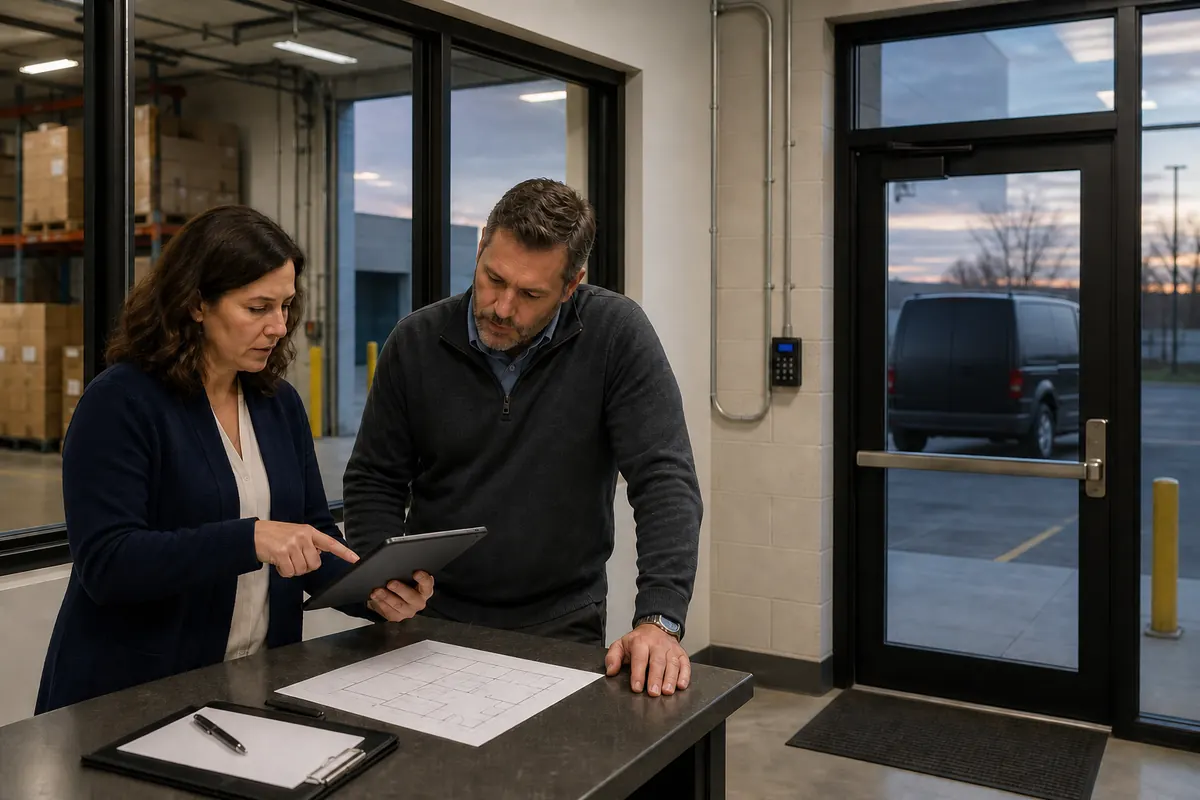
Walk the property with the people who use it. Mark where trailers park, where snow is stored, which routes remain active and who controls the gates. Treat these as inputs to the proposed design. Keep detailed vulnerabilities and equipment layouts within the authorised project team.
The aim is to make the intrusion detection system answer a specific operational question. A large shaded area on a drawing is insufficient evidence by itself.
Which detection approach fits the boundary?
Different technologies observe different things. Ask the supplier to explain what the proposed device detects and what could interrupt that observation.
| Approach to discuss | Useful starting question | What to examine on site |
|---|---|---|
| Fence-mounted detection | Do we need warning of disturbance to this fence? | Fence condition, movement, vegetation and maintenance responsibilities. |
| Beam detection | Is there a clear crossing line we can keep clear? | Obstructions, alignment and legitimate activity through that line. |
| Video-based detection | Can the camera recognise the agreed event in this view? | Lighting, weather, scene changes and objects blocking the view. |
| Radar detection | Do we need movement information across an outdoor area? | Coverage, obstructions and how an operator will verify an alert. |
British Columbia’s April 2023 physical-security standards for government facilities specifically identify fence condition, maintained space and vegetation as considerations when selecting perimeter detection. Those are useful design cautions, not requirements imposed on an Ontario commercial yard.
Axis’s radar surveillance white paper explains that radar responds differently from cameras to visual effects such as shadows and changing light. It also distinguishes radar’s movement information from camera imagery. Radar therefore does not automatically answer who a person is or what they are doing. This is manufacturer guidance, not a guarantee that a particular product will work across your entire yard.
Why can turning down the sensitivity make things worse?
A quieter system may have become less capable of detecting the event you bought it for. Review both unwanted alerts and missed detections.
Consider an illustrative example: a trailer is regularly parked across a camera’s view. The team changes the detection area to stop repeated unwanted notifications, but nobody tests the remaining approach to the loading area. The notifications stop while the coverage question remains unanswered.
A better next step is to identify the cause, consider a change to parking or device placement, and repeat the agreed test. This example describes a possible failure mode, not a reported customer incident.
Ask for a documented trial under representative conditions. Include ordinary deliveries and closing routines as well as controlled test entries. Where winter or heavy rain cannot be observed during handover, record that limitation and agree when those conditions will be reviewed. Avoid accepting a claim of reliable year-round performance on the strength of one clear afternoon.
Who checks the alert, and what happens next?
Get an explanation of the complete service, including nights, weekends and an unanswered keyholder call.
Hamilton Police’s verified alarm response programme identifies verification routes including video, audio, an on-scene witness, or different sensors activating in a sequence indicating suspected criminal activity. It treats panic, hold-up and duress alarms separately. Ask your provider to confirm the rules for your actual address; a second arbitrary activation should not be presented as automatic proof of an intrusion.
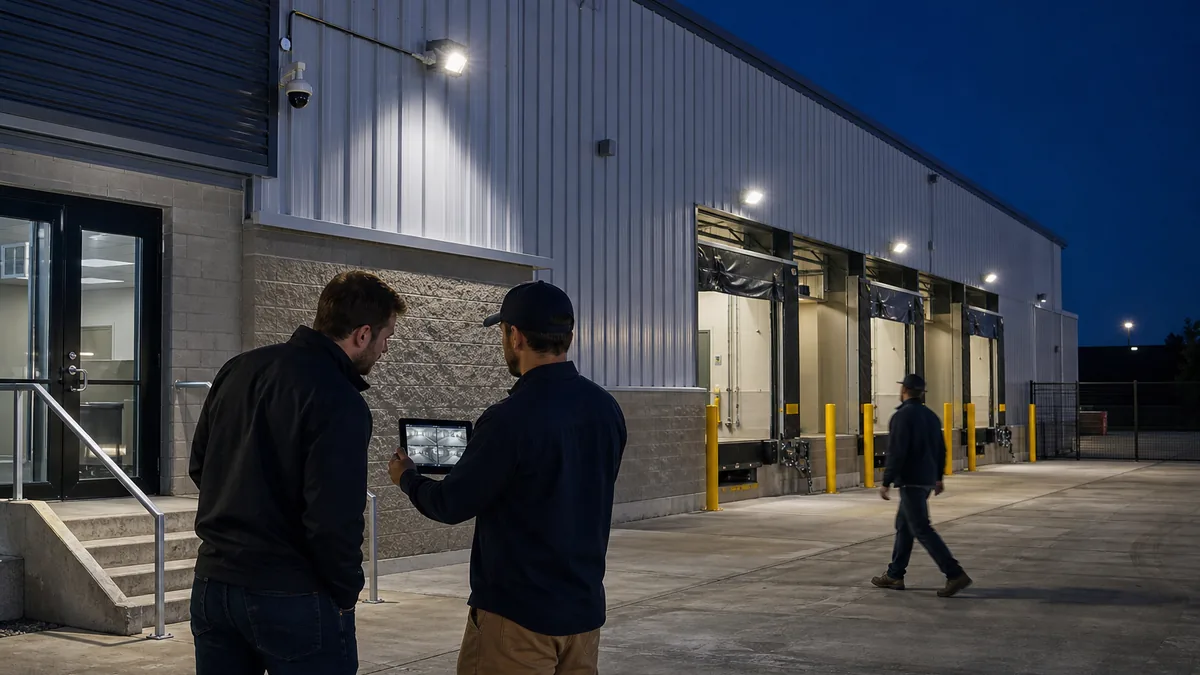
Discuss what information an operator receives when an outdoor zone activates. Can they locate the event? Is the relevant view available? What happens if it is blocked or the connection has failed? Who owns the next action? Ordinary staff should not be expected to enter a potentially unsafe yard to establish whether an intruder is present.
If a proposal refers to ULC certification, ask which service and installation it covers. UL Solutions’ Canadian certificate programme distinguishes installation, monitoring and alarm-response services and explains the role of listed companies and service arrangements. A reference to a monitoring centre should not replace a clear description of the service being supplied to your property.
What should the acceptance test show?
Before signing off, agree a supervised demonstration that follows an event from the yard to the person responsible for it. These are suggested acceptance questions, not a universal testing standard:
- Does the agreed test event generate the right alert in each nominated area?
- Can the operator identify the area and assess the available information?
- Does normal permitted activity follow the agreed operating rules?
- Does the team know when equipment or communications are unavailable?
- Can the responsible person explain the escalation route and its limits?
Arrange tests with the installer and monitoring provider so they do not cause an unintended dispatch. Record what passed, what failed, the conditions observed and who will resolve each open issue. Repeat affected checks after corrections.
For sites with changing trailer positions, agree who reviews coverage after a layout change. The wider warehousing and logistics security plan should connect those checks with yard operations. This article’s decision is narrower: whether the proposed outdoor detection and response work together at your site.
What will it cost to keep working?
Ask the quote to separate equipment and installation from monitoring, communications, maintenance and any response charges. Also identify the work your own team must do, such as vegetation management, keeping agreed areas clear and notifying the provider about schedule changes. Prices depend on scope, so a generic cost or promised saving would be misleading.
Where video includes publicly accessible areas, the federal Privacy Commissioner’s overt surveillance guidance recommends considering less intrusive alternatives and limiting camera views and recorded-information handling. The guidance excludes employee surveillance; confirm the applicable workplace and privacy obligations separately. More coverage should have a defined purpose rather than extend unnecessarily onto neighbouring property.
You may find that repairs, clearer schedules or a better monitoring arrangement address the immediate gap. Keep suitable existing equipment when testing supports that choice. Add or replace devices where a demonstrated limitation justifies the expense.
The useful outcome is a warning that somebody can understand and act on, with known limitations. Begin by reviewing one exposed area and tracing what would happen after its alarm. That conversation will reveal more than a catalogue of sensor features.
Frequently Asked Questions
Do not assume it will. The monitoring provider must follow the policy for the site's police service, including any verification requirements. Ask who assesses an outdoor alert, what evidence they receive and how they request the appropriate response.
Possibly. First check whether they support suitable detection and provide useful views under the site's actual lighting, weather and storage layout. Recording footage alone does not establish that an alert will be assessed or acted on.
They answer different questions. Fence sensors can detect disturbances to a suitable fence; radar can detect and track movement within its coverage. Choose according to the boundary, obstructions, normal activity and verification needs, then test the proposed installation.
Review unwanted alerts and repeat controlled detection tests after changes. A quieter system is only an improvement if it still detects the agreed events. Record unresolved areas and retest when the yard layout or operating conditions change.