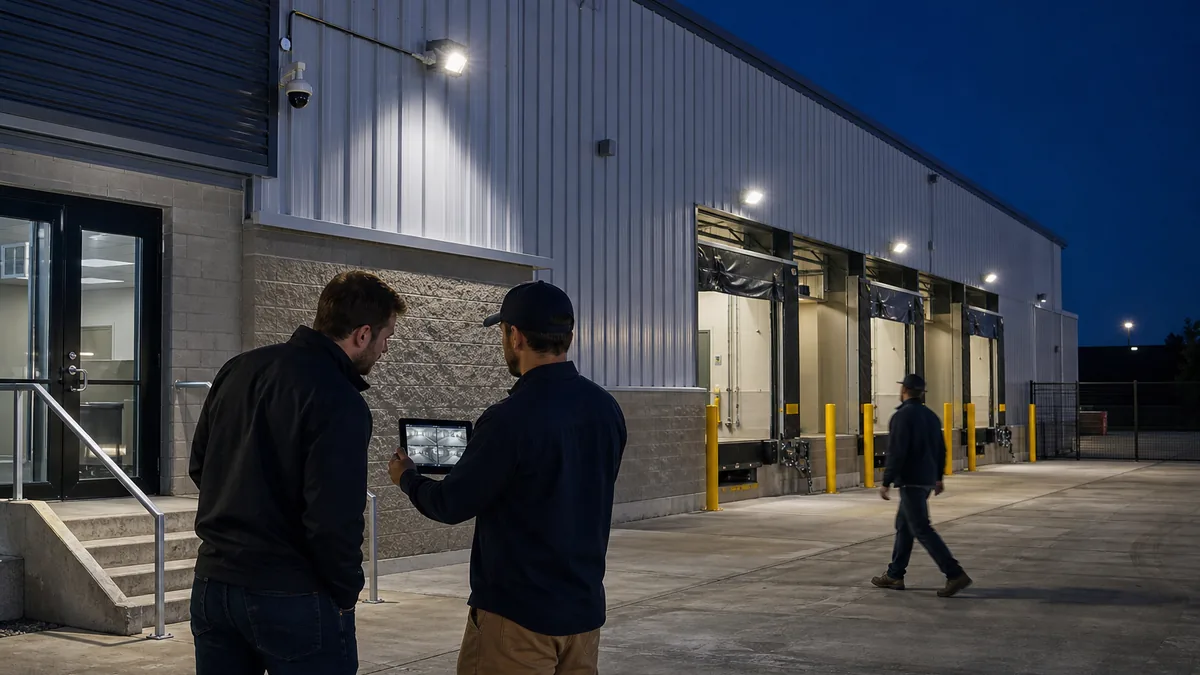
Building a Commercial False-Alarm Reduction Plan
Reduce commercial false alarms through event analysis, user procedures, sensor corrections, verification, maintenance and measurable acceptance tests.
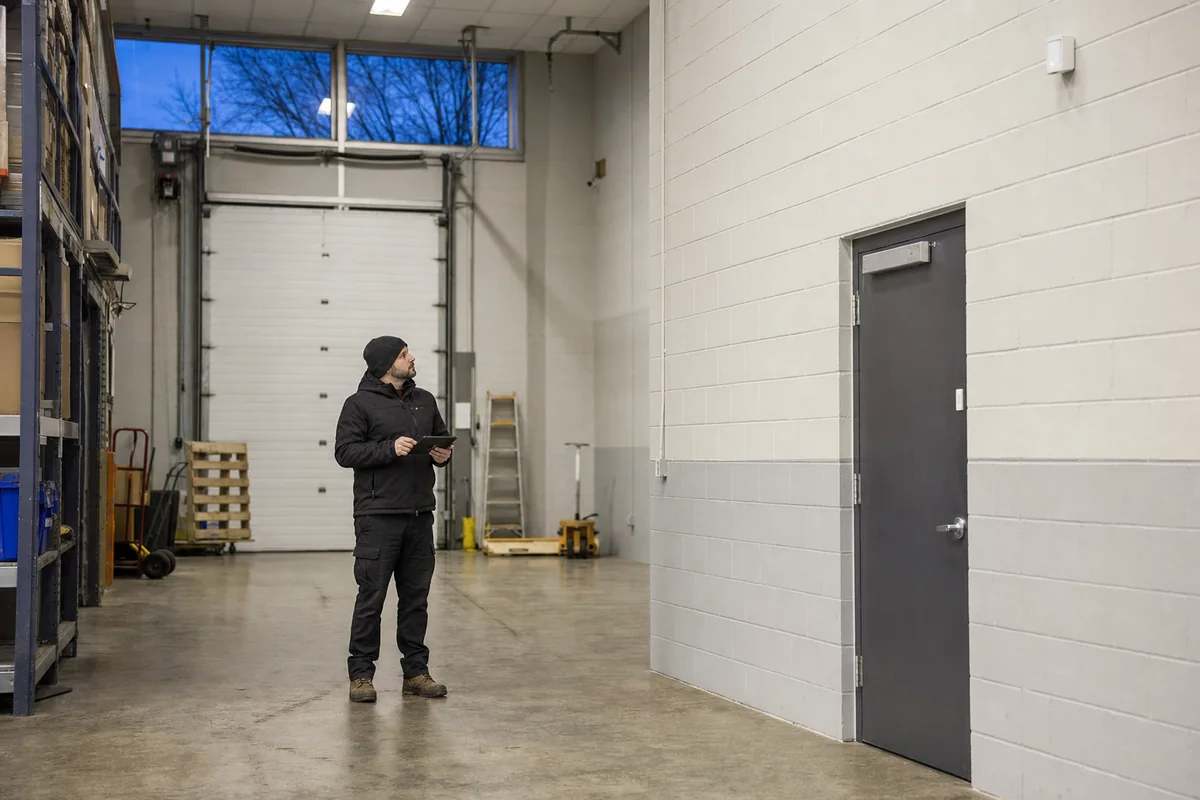
Repeated false alarms create more than a line item on an invoice. They interrupt managers at night, send keyholders across the city, distract monitoring operators and weaken confidence in the next signal. Staff can begin treating every event as another system mistake. That loss of response discipline is a serious operational risk.
A useful reduction plan begins with evidence from each event. It assigns owners, corrects the highest-frequency causes and measures whether the corrections hold. Equipment replacement may be part of the answer. Many sites gain faster results from better closing procedures, current call lists, correct sensor placement, disciplined testing and stronger verification.
This guide gives operations and property managers a practical way to improve a monitored commercial alarm system and its underlying intrusion detection process.
Executive plan: manage false alarms as recurring incidents
Create one register for every unwanted activation, regardless of whether police were dispatched. Each record should include:
- alarm date and exact time;
- site, partition and zone description;
- arming state and the user involved;
- sequence of signals received by the monitoring centre;
- weather, temperature and site activity;
- recent construction, stock movement or cleaning;
- monitoring calls and keyholder responses;
- verification information available;
- dispatch and cancellation times;
- attending technician findings; and
- corrective action, owner and due date.
Review the register monthly until performance is stable. Group incidents by cause and zone. A small number of repeat conditions often account for a large share of disruption. The register converts opinion into a prioritized work list.
1. Understand the local response consequence
Police alarm policies vary across the GTA and surrounding municipalities. The monitored site, alarm company and keyholders should know the current rules before an event occurs.
Hamilton Police Service’s current Verified Alarm Response Program requires verification before police dispatch for ordinary intrusion signals. Accepted methods include audio, video, an on-site witness or activation of at least two different sensors in a sequence that indicates suspected criminal activity. Panic, hold-up and duress alarms are treated separately. The page lists a charge of $169.50 for a dispatched false alarm and $84.75 for a dispatch cancelled while officers are en route.
Peel Regional Police describes a different local framework in its Alarm Response Policy information. It states that the monitoring company is invoiced for each dispatched false alarm and that police response may be suspended and reinstated at police discretion.
These examples show why a multi-site business needs a municipality field in its alarm register. Record the applicable verification rule, cost-recovery process, suspension risk, appeal process and emergency contacts for each property. Confirm details with the relevant police service and monitoring provider because policies and fees can change.
2. Classify the cause before selecting the correction
Use a short cause taxonomy so that reports remain comparable across sites:
| Cause group | Typical examples | First evidence to review |
|---|---|---|
| User procedure | Late disarming, incorrect code, arming with staff inside, unsecured door | User history, entry and exit timestamps, training record |
| Environment | Heating airflow, sunlight, pests, moving signs, water, vibration | Site photos, temperature, weather, detector field of view |
| Building operation | Cleaning, deliveries, contractors, racking or layout changes | Work orders, access records, schedules, recent changes |
| Device or installation | Loose contact, damaged cable, poor mounting, depleted battery, incorrect sensor type | Zone history, physical inspection, measured power, walk test |
| Programming | Wrong zone type, unsuitable delay, missing partition, poor verification logic | Current programming record and event sequence |
| Communications | Intermittent path, network change, weak cellular signal, power issue | Communicator logs, trouble events, network and power records |
| Monitoring workflow | Outdated call list, unclear site instructions, missed cancellation | Operator record, call recordings where available, contact list |
Assign a confidence level to the diagnosis. A door found open after an alarm provides useful evidence. A reset with no inspection leaves the cause unresolved. Track unresolved events and increase investigation when the same zone activates again.
3. Fix user and closing procedures first
Entry, exit and closing routines produce many preventable activations. A concise site procedure should answer:
- Who performs the final walk-through?
- Which doors, windows and internal areas must be checked?
- How does the closer confirm that cleaning staff, contractors and late workers have left?
- Which keypad or app is used to arm each partition?
- What feedback confirms successful arming?
- Who calls the monitoring centre when a mistake occurs?
- Which phone number and account information are required?
- Who attends if verification or police response is needed?
Provide unique user codes and remove shared credentials. Unique codes make the event history actionable and allow targeted coaching. Review permissions when employees change roles or leave. Temporary users need automatic expiry dates.
Train with realistic scenarios. Ask a user to enter, disarm, move between partitions, arm at closing, cancel an accidental activation and report a lost credential. Document completion. A handout without a practical exercise provides weak assurance.
4. Correct sensor placement and environmental causes
Motion detectors respond to changes within a defined field of view. Their reliability depends on mounting, orientation, temperature, airflow, moving objects and the activity expected in the protected space.
Bosch’s current Commercial Series detector installation manual directs installers to keep the detector level and within its defined mounting-height range. It warns against direct sunlight, outdoor use, rapid temperature changes, heating or air-conditioning outlets, glass exposed to the outdoors and locations where small animals can enter sensitive zones. These instructions apply to the cited detector family. Every installed device should be checked against its own manufacturer documentation.
Inspect the complete field of view. Look for:
- seasonal sunlight and vehicle headlights;
- ceiling fans, hanging signs, curtains and plastic strip doors;
- warm air from unit heaters and cold air from loading doors;
- racks, cartons or furniture that moved after installation;
- rodents, birds and insects near the detector;
- vibration from machinery or overhead doors;
- condensation, water entry and dust;
- damaged housings or paint on the lens; and
- objects placed directly in front of anti-mask detectors.
After correction, conduct a documented walk test during representative operations. Include areas where detection is required and areas where normal movement should be ignored. Record the device model, settings, mounting height and test result.
5. Use panel features deliberately
Modern control equipment includes features designed to reduce unwanted transmissions. ANSI/SIA CP-01-2019 covers control-panel and arming-device design features for false alarm reduction in residential and commercial systems. Its scope includes installers, users, monitoring centres, manufacturers and authorities.
Ask the alarm provider which CP-01 features are supported and enabled. Relevant settings may include entry and exit timing, audible progress indications, recent-closing handling, abort and cancellation reporting, duress-code design and testing modes. The appropriate configuration depends on the site’s risk and operations.
Avoid blanket programming changes. A longer entry delay may help a user reach a keypad, while the same delay may be unsuitable at a high-risk opening. Cross-zone logic can add confidence when a person moves through sequential areas, though poor zone selection can delay a valid alarm. Document the purpose and acceptance test for each special setting.
6. Strengthen verification before dispatch
Verification adds context to a signal. The Monitoring Association’s TMA CS-V-01 overview describes confirmation methods that include multiple contact attempts, multiple alarm trips, audio and video. The standard aims to reduce notifications that are eventually classified as false and to help monitoring personnel identify likely unauthorized activity.
Choose verification methods by event type:
- Sequential zones: two distinct sensors activate in a plausible path.
- Video: a camera view confirms a person or relevant activity at the alarm location.
- Audio: trained monitoring staff hear activity consistent with intrusion.
- On-site witness: a guard, employee or keyholder confirms evidence.
- Call verification: the monitoring centre reaches approved contacts using a documented sequence.
Verification quality depends on design. A camera facing away from the alarm zone adds little. Two sensors affected by the same heater may create misleading confirmation. An outdated contact list can turn a minor user error into a dispatch.
Define privacy boundaries, viewing access, retention and authorized uses before enabling audio or video verification. Confirm that monitoring staff receive the correct zone names, site instructions and escalation rules.
7. Review monitoring and ULC service requirements
Canada’s ULC certificate programs identify standards relevant to intrusion alarm installation and monitoring. UL Solutions’ Canadian fire and security alarm certificate program overview cites CAN/ULC-S301:2018 for signal receiving centre configurations and operations, CAN/ULC-S302-14 for installation, inspection and testing of intrusion alarm systems, and CAN/ULC-S304:2016 for control units, accessories and receiving equipment.
The applicable standard, certificate and service level depend on the property, insurer, risk and contract. Ask the provider to identify the exact edition and scope that applies. Confirm:
- signal receiving centre listing and service category;
- communication path supervision;
- response to trouble, low-battery and communication events;
- inspection and test frequency;
- record retention and availability;
- technician response expectations;
- keyholder and authority notification procedures; and
- responsibilities shared among owner, installer and monitoring provider.
Keep the current certificate, system description, zone list, call list and inspection reports together. Operations staff should know where to find them during an incident.
8. Build a preventive maintenance rhythm
Create a calendar from the applicable standards, manufacturer instructions, insurer conditions and monitoring agreement. Add targeted work when operations change.
Useful recurring tasks include:
- reviewing zone event and trouble history;
- testing user codes, duress handling and cancellation procedures;
- checking door and window alignment;
- inspecting motion-detector fields of view;
- confirming battery condition and power supplies;
- testing communication paths and failure reporting;
- verifying monitoring-centre zone text and call lists;
- confirming video or audio verification coverage;
- checking time, schedules and automatic arming; and
- updating drawings, device lists and programming records.
Trigger an additional review after renovations, new racking, HVAC work, staffing changes, seasonal temperature shifts, pest activity, repeated events or a change in cleaning and delivery schedules.
9. Measure outcomes and escalate repeat zones
Use a small dashboard that supports decisions:
- unwanted activations per site and per month;
- events by cause group;
- repeat events from the same zone;
- dispatches, cancellations and associated charges;
- percentage of events with a confirmed root cause;
- time from event to corrective action;
- overdue call-list and access reviews; and
- verification success by method.
Set escalation rules. A second unexplained event from one zone within a defined period should trigger a site inspection. A third event should require management review, a formal root-cause record and confirmation that the device and application remain appropriate.
Measure valid detection during testing as well. Reducing sensitivity without a controlled walk test can hide a performance loss. The goal is dependable detection with fewer preventable activations.
10. Use an acceptance test for every correction
A completed work order should include evidence that the correction worked. Match the test to the cause:
- repeat the employee entry and exit sequence;
- open, close and gently move a repaired door contact;
- walk the full motion-detector coverage pattern;
- operate HVAC equipment and overhead doors;
- test each required communication path;
- create a test alarm and confirm monitoring-centre zone text;
- follow the cancellation and keyholder call sequence;
- verify sequential-zone, audio or video logic; and
- confirm that valid alarm conditions still reach the monitoring centre.
Record the date, tester, device, settings, monitoring result and any limitation. Recheck the event register after 30 and 90 days. A sustained reduction provides stronger evidence than a single successful test.
Questions to ask the alarm provider
- Which three zones generated the most unwanted events during the last 12 months?
- Which events remain without a confirmed cause?
- Which CP-01 false-alarm reduction features are enabled?
- What verification methods are available for each alarm type?
- Do monitoring instructions match the current municipal police policy?
- Are zone names specific enough for a keyholder and police dispatcher?
- Which detectors operate outside their documented application or environment?
- What inspection and testing schedule applies under the contract and relevant ULC program?
- How are trouble signals, communication failures and low batteries escalated?
- What evidence will show that each corrective action preserved valid detection?
A disciplined false-alarm reduction plan protects response credibility. Operations leaders gain the clearest results by combining event data, staff procedures, correct sensor application, monitoring verification and measurable testing. Each corrected cause strengthens confidence in the signals that remain.
Frequently Asked Questions
Record the exact zone, timestamp, arming state, user activity, monitoring actions, site conditions, dispatch outcome and any recent changes. A repeatable incident record helps separate training problems, environmental triggers, hardware faults and programming issues.
Yes. Verification can add information from multiple zones, audio, video or an on-site witness before a dispatch request. The method must match local police policy, site risk, privacy requirements and the capabilities of the monitoring provider.
Use the inspection and testing schedule required by the system design, applicable standard, insurer, monitoring agreement and manufacturer. Add targeted tests after construction, layout changes, repeated events, device damage or environmental changes.
Only after reviewing the event and the site's risk. A modest adjustment may suit normal operations, while an excessive delay can weaken detection. Training, door routing, arming responsibility and credential integration may solve the underlying problem more effectively.